
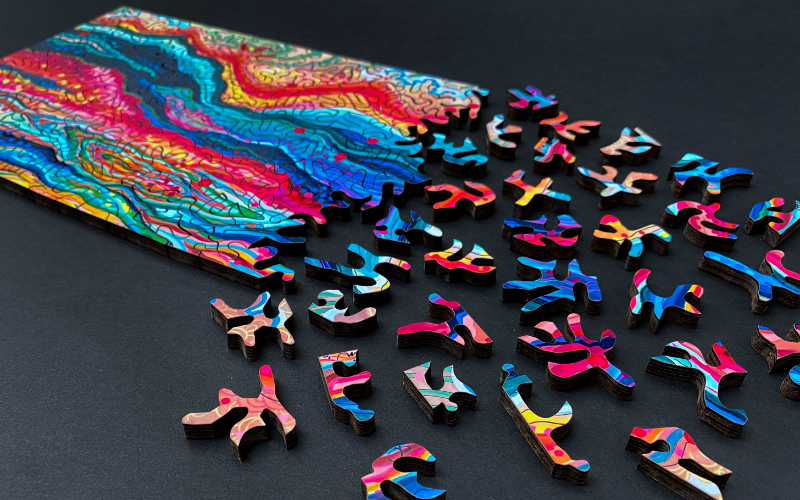
A sky can contain a dozen different blues, but a loose pile often turns them into one impossible category. Repeated texture needs smaller boundaries. Jigsaw repeated texture gives that moment a name, but the useful part is the habit behind it. The aim is not to make every move look clever. It is to make the next move easier to explain.
Why Jigsaw repeated texture matters on an ordinary puzzle
Texture is the way a surface repeats: cloud grain, water ripples, grass blades, sand marks, or a soft shadow. Two pieces can share a color while belonging to different zones because the marks travel in different directions or the light changes across the image. A player does not need a tournament setup or a perfect memory to use this idea. It works during a short browser session, on a printed page, or in the middle of a game when attention is starting to drift.
Jigsaw solving works the same way with visual evidence. Color suggests a region, texture narrows it, line direction gives it a path, and shape decides whether the connection is physically plausible. No single clue needs to carry the whole decision. The useful habit is to let one clue invite a test and let the other clues approve it. That keeps a difficult image from becoming a sequence of random clicks. It also gives you a natural place to pause when the evidence runs out.
The broader history of this kind of puzzle helps explain why the habit travels well. Museum of Play jigsaw puzzle history provides useful background for the jigsaw format, while Britannica jigsaw puzzle overview offers a second view of its rules or history. The sources differ in detail, but both point to the same practical lesson: a clear structure gives the player something reliable to inspect.
How to use Jigsaw repeated texture without forcing it
Divide the field into texture neighborhoods. Put pale pieces with soft horizontal marks in one group, darker pieces with broken streaks in another, and pieces with a sharp edge or object fragment aside. Keep the reference image nearby so the groups remain tied to location rather than becoming abstract color piles. Start with a legal move and let the evidence narrow the field. If the position does not improve, stop. A good technique is a filter, not a command to keep pushing the same idea after the board has moved on.
A short routine for the next game
Use texture after color and before shape. First note the broad zone, then the grain, then the line direction, and only then test tabs and blanks. When a piece fails, return it to the correct texture group instead of starting a new random pile.
- Split a broad color field into texture zones.
- Compare grain, light, and line direction.
- Keep groups tied to image location.
- Use piece shape only after texture narrows the choice.
The mistake that makes this idea feel harder
The common mistake is sorting by color alone. A large blue pile feels organized, but it hides the evidence that would make the next step easy. Another mistake is treating every repeated mark as identical. Compare spacing, direction, and softness before deciding two pieces belong together.
What to remember when the board changes
Repeated texture stops being a blank wall once you give it structure. The puzzle may remain slow, but the slow work becomes visible and deliberate. That is also why Jigsaw repeated texture should stay practical. Use it when it describes the board in front of you, then return to ordinary reading when the evidence changes. A puzzle is allowed to ask a different question on the next move.
If Jigsaw repeated texture does not produce a move today, that is useful information too. Leave the position clean, keep the strongest clue visible, and come back after one ordinary move. Techniques become reliable through that small return: notice the signal, test it, record what changed, and stop before the idea turns into a guess. Over time, the pause becomes part of your solving rhythm rather than a sign that the puzzle has defeated you.
Keep the session concrete. Name the clue, make one reversible change, and look again. That is enough for a useful practice round, even when the puzzle is unfinished. A short note about what changed makes the next session easier to start.
For a live session, Play more puzzles on free-jigsaw-puzzle.org. When you want a related example, browse related posts on this site. You can also try another daily puzzle at Easy Daily Puzzle or find more puzzle guides on Easy Daily Puzzle. Keep the next step simple: play one puzzle, try the routine once, and notice which decision became clearer.